Secretary of State Hillary Clinton meets with Nigerian President Umaru Yar’Adua at the state house in Abuja on Wednesday, Aug. 12, 2009. (AP Photo)
(CNSNews.com) – Two days after snapping at an African student who asked a question she did not like, Secretary of State Hillary Clinton on Wednesday courted controversy again with a comment appearing to link democracy in the U.S. with what passes for democracy in Nigeria.
 
Speaking in Abuja, the capital of Africa’s most populous country, Clinton discussed the importance of free and fair elections, telling an audience of civil society representatives that the electoral system in Nigeria was lacking, and criticizing a “lack of transparency and accountability.”
 
Then she drew a comparison to the situation in the U.S. where, she said, “our democracy is still devolving.”
 
“You know, we had all kinds of problems in some of our past elections, as you might remember,” she continued. “In 2000, our presidential election came down to one state where the brother of the man running for president was the governor of the state. So we have our problems too.”
 
Clinton was speaking in a country which, according to a Transparency International global survey this year, rated its political parties as the sector or institution most affected by corruption by a greater margin than any of the other 66 countries tracked.
 
The democracy watchdog Freedom House has rated Nigeria either “not free” or “partly free” since the 1980s.
 
(It defines “not free” as a country where basic political rights are absent, and basic civil liberties are widely and systematically denied. A country designated “partly free” is one having limited respect for political rights and civil liberties, frequently suffering from endemic corruption, weak rule of law, and ethnic or religious strife.)
 
Following a campaign in which some 200 people were killed, Umaru Yar’Adua won a presidential election in 2007 that election monitors said was rigged in his favor. The Bush administration said it was “deeply troubled” by the election, in which he garnered 70 percent of the vote. A legal challenge by his defeated opponents was unsuccessful.

The next election is due in two years’ time, and at a press conference in Abuja after a meeting with her Nigerian counterpart Ojo Maduekwe, Clinton said the U.S. supported the government’s “efforts to increase transparency, reduce corruption, [and] provide support for democratic processes in preparation for the 2011 elections.”


Secretary of State Hillary Clinton waits to address Nigerian government officials and leaders of industry in Abuja on Wednesday, Aug. 12, 2009. (AP Photo)
In her remarks to the civil society audience on Wednesday, Clinton also praised the 2008 U.S. presidential election, using it as an example of how elections should be won – and lost.
 
“Part of creating a strong democratic system is that the losers, despite how badly we might feel, accept the outcome,” she said. “Because it is for the good of the country we love.”
 
“In my country, the man that I was running against and spent a lot of time and effort to defeat, asked me to join his government. So there is a way to begin to make this transition [in Nigeria] that will lead to free and fair elections in 2011.”
 
Ahead of Clinton’s arrival in Abuja, Nigerian newspapers grumbled about what they called breaches of protocol relating to the handling of security for the visit.
 
“Nigerian and U.S. officials could have more readily planned and agreed on the necessary protocol and security arrangements for Senator Clinton’s visit without ruffling feathers and treating the host nation as incompetent,” said the country’s Guardian daily in an editorial. “Feelings are important in diplomacy.”
 
Some commentators also saw the visit as an attempt to make up for was widely viewed as a “snub” – President Obama’s decision to visit neighboring Ghana rather than Nigeria last month.
 
Clinton is nearing the end of an 11-day tour of seven African nations, which has focused on good governance, fighting corruption, economic development and improving the lives of Africa women.
 
In the Democratic Republic of Congo on Monday, she displayed irritation when asked by a student in Kinshasa, who spoke via a translator, what “Mr. Clinton” thought about China’s trade dealing with the DRC.
 
After looking puzzled for a moment, Clinton replied, “Wait, you want me to tell you what my husband thinks?” Then she added, visibly annoyed, “My husband is not the secretary of state, I am. So you ask my opinion I will tell you my opinion. I am not going to be channeling my husband.”
 
It was reported subsequently that the student had meant to ask about Obama’s view.
 
Former President Clinton’s brief mission to North Korea to bring home two journalists imprisoned there coincided with the beginning of the African tour, dominating media headlines on the day Hillary Clinton arrived in Kenya.
 
2000
 
During the closely-contested 2000 election race between George W. Bush and Al Gore, Florida’s 25 electoral votes were in the balance. Bush’s brother, Jeb Bush, was Florida’s governor at the time.
 
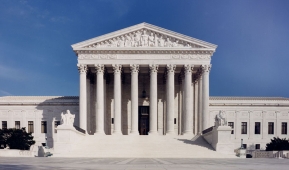
The state’s Supreme Court ordered a statewide manual recount but the U.S. Supreme Court reversed the order. Although Gore had won the popular vote by a half percent margin Bush took the electoral vote by 271 to 266, and thus the presidency.
 
The claim that Bush won unfairly still has its supporters despite the fact that a comprehensive review carried out by a consortium of eight news organizations concluded the following year that Bush would have won even if the U.S. Supreme Court had not ruled as it did.
 
“Contrary to what many partisans of former Vice President Al Gore have charged, the United States Supreme Court did not award an election to Mr. Bush that otherwise would have been won by Mr. Gore,” the New York Times reported in November 2001.
 
“A close examination of the ballots found that Mr. Bush would have retained a slender margin over Mr. Gore if the Florida court’s order to recount more than 43,000 ballots had not been reversed by the United States Supreme Court.”