(CNSNews.com) – The Congressional Budget Office (CBO) did not calculate the economic costs of House Democrats’ massive cap and trade legislation, only accounting for how the government plans to collect and redistribute revenues from selling carbon emissions permits.
 
The analysis, which was released June 19, shows that if Democrats’ carbon reduction schemes turn out exactly as planned, government will be able to largely mitigate the per-household financial impact of a cap and trade system by redistributing the revenues collected from businesses across the population, resulting in a net per-household cost of about $165 per year.
 
However, the CBO report does not examine the economic impact of imposing billions in new operating and production costs on virtually every industry in America. It only assumes that the price businesses pay for the allowances will be directly passed on to consumers in the form of higher prices.
 
CBO does not examine the cost from lost production and energy use to the economy, including higher unemployment and reductions in wages and benefits that would come as businesses are forced to cut back on production due to federally mandated reductions in energy usage.
 
“The resource cost does not indicate the potential decrease in gross domestic product (GDP) that could result from the cap,” the report said in a footnote. “The reduction in GDP would also include indirect general equilibrium effects, such as changes in the labor supply resulting from reductions in real wages and potential reductions in the productivity of capital and labor.”
 
Resource cost is the cost to the public of the additional resources required to comply with the new nationwide federal mandates – things such as time, building new sources of power generation, and changes in personal behavior such as buying a more fuel-efficient car or carpooling to work. CBO did not include negative economic effects in its estimation of resource cost.
 
CBO also left out the direct cost to local, state, and the federal government of complying with the new federal energy regulations. While the federal government can run deficits eternally, state and local governments cannot, so they must pass on the costs of federal compliance to taxpayers either through reduced services or higher taxes.
 
“(I)f governments chose to increase taxes, the cost would fall on households on the basis of their share of federal, state, and local taxes. In contrast, if governments chose to cover the additional expenses by cutting back on the services that they provide, the cost would fall on households that no longer received those services,” CBO reported.

CBO did admit in a separate analysis published June 5 that even its limited cost estimates of carbon allowances could be wrong if everything doesn’t go as planned and either the public or the economy fail to respond as quickly as Congress would like them to.
 
“CBO’s estimates of the responsiveness of firms and households to changes in energy prices strongly influences its estimates. If that responsiveness were 10 percent stronger (or weaker), on average, allowance prices would be roughly 8 percent lower or 9 percent higher.”
 
CBO noted that an Environmental Protection Agency analysis of the Lieberman-Warner Climate Security Act of 2007 indicated that carbon cap prices could be as much as 80 percent higher than predicted if the economy could not develop sufficient nuclear, biomass, and carbon-capture energy technologies fast enough to keep up with the rising energy prices caused by a cap and trade system.
 
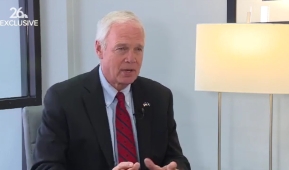
David Kreutzer, senior policy analyst in energy economics at the conservative Heritage Foundation told CNSNews.com that had CBO done an economic analysis of the cap and trade bill, the costs per-household would have been much higher than $165.
 
“As firms adjust, that’s going to throw the economy out of whack, initially, so you’re going to have an increase in unemployment, which we find is going to be a decrease in almost two million jobs that first year,” Kreutzer said. “Starting around 2018, 2019, the reductions in CO2 because of the caps hit the economy harder than it can adjust.
 
“Households will have to pay direct energy costs. For a family of four – by 2035 – that cost will go over $1,200 per year. That’s only a fraction of the increased costs, because they’re going to have to pay higher costs for everything else, because energy is a component of everything else, and we find that that cost is going to be $4,600 by 2035 for a family of four (with) the average being about $3,000 per year.”
 
Kreutzer said that the so-called “climate” legislation was no such thing, saying that it would severely damage the economy while delivering negligible climate benefits.
 
“The bill is masquerading as a climate bill. It can’t be a climate bill, because there is almost universal agreement that it will have negligible impact on world temperatures by itself. We’re getting almost no benefit, I mean, it’s attractive to people who want government to have more money, but you’re getting no benefit for the environment.”