(CNSNews.com) – A U.S. attack on Syrian soil over the weekend was intended to derail recent diplomatic breakthroughs between Damascus and the European Union, the Syrian government charged on Monday.
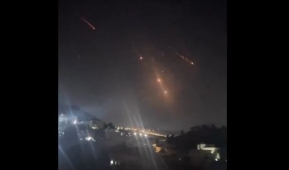
The White House and State Department declined to comment directly on Sunday’s raid, but American officials told U.S. media that helicopter-borne troops had killed an Iraqi al-Qaeda leader responsible for smuggling foreign fighters into Iraq to fight coalition forces there. Syrian state media said eight civilians were killed.
The cross-border attack came at a time when Syria, an ally of Iran and a sponsor of the Hezbollah and Hamas terrorist organizations in Lebanon and Gaza, has been assiduously courting European governments in a bid to end its international isolation.
It came just days after E.U. foreign policy chief Javier Solana visited Damascus, and during a visit by Danish Foreign Minister Per Stig Moller. Last month, French President Nicolas Sarkozy became the first E.U. head of state to visit Syria in five years.
On Monday, Syrian Foreign Minister Walid al-Moualem was in London for talks with his British counterpart. He said afterwards they had discussed “the U.S. aggression on the Syrian lands,” which he claimed was aimed at obstructing Syrian relations with Europe.
A joint statement issued by Al-Moualem and Foreign Secretary David Miliband included a brief reference to the strike: “In respect of reports of an incident on the Syria/Iraq border, the Foreign Secretary confirmed that it was the longstanding position of the British Government to regret any civilian casualties.”
A scheduled joint media conference was abruptly cancelled. The Foreign Office said in a statement, “we and the Syrians have agreed that it would not be appropriate to hold a formal press conference as planned.”
Condemnation of the strike came from expected quarters – Russia (“unilateral military actions … on the territory of sovereign states”), Iran (“unacceptable”), Lebanon (“a dangerous, unacceptable attack”), the Arab League (“a violation of Syrian sovereignty violation”) and Hezbollah (“a terrorist crime”).
But several E.U. countries also voiced unease.
“France calls for restraint and underlines its attachment to the strict respect of the territorial integrity of states,” Sarkozy’s office said in a statement. It called for “light to be shed” on the cross-border raid and said France “deplores the loss of Syrian civilians.”
Spain’s left-wing government also weighed in. Foreign Minister Miguel Moratinos phoned Syrian Information Minister Mohsen Bilal to express Spain’s condolences and call for an end to “such dangerous events,” Syria’s state-run SANA news agency reported.
Al- Moualem said in London Monday that the E.U. openness to Syria reflected European leaders’ awareness of Syria’s central and important role in the region.
Mideast role
The E.U. froze contacts with Damascus after former Lebanese prime minister Rafik Hariri was murdered in February 2005.
U.N. investigators said high-ranking Syrian and Lebanese intelligence officers were implicated in the Beirut bombing, which killed Hariri and 22 others.
Syrian President Bashar al-Assad has denied any involvement in the killing, but he and his allies in Lebanon object to a U.N. plan for a special tribunal to try the suspects. The tribunal is expected to be established in The Hague in 2009.
France, the former colonial power in both Lebanon and Syria, was especially angered by the killing of Hariri, who was a close friend of then French President Jacques Chirac.
Although the Hariri issue remains unresolved, Chirac’s successor Sarkozy has led the recent diplomatic overture towards Syria. Immediately after assuming the rotating E.U. presidency in July, Sarkozy invited Assad to a gathering of Mediterranean leaders in Paris, and stoked controversy by also having him attend the traditional Bastille Day military parade in the capital.
The E.U.’s opening up to Syria is seen as an effort to regain the union’s waning influence in Middle East peace efforts. Although a member of the so-called Quartet – with the U.S., Russia and United Nations – the E.U.’s role has been a limited one, to the frustration of Arab parties which view it as a potential balance to Washington.
Moratinos, the Spanish foreign minister, is a veteran of Mideast diplomacy, serving as an E.U. special envoy for Middle East peace efforts from 1996 until 2003.
During a visit last month to Syria and Lebanon, he raised eyebrows with some of his remarks to local media.
According to translations provided by the Middle East Media Research Institute, Moratinos said efforts to isolate Syria were “a grave mistake,” called Hezbollah’s weapons “an internal affair” (despite three U.N. Security Council resolutions since 2004 requiring the terrorist group’s disarmament), and said the U.S.-led unipolar order was ending.