Smoke no longer fills the room, but deals are being done behind closed doors on Capitol Hill, despite the objections of at least one U.S. lawmaker.
A call for transparency in the federal government was floated Friday -- not by President Barak Obama, who promised the most transparent administration in history -- but by a Republican member of Congress. Rep. David Dreier (R-Calif.) made the call during Friday’s meeting of the House Committee on Rules.
The committee – which crafted the rules that shaped the debate and vote on the House Democrats’ health care bill this weekend – meets in one of the smaller rooms in the Capitol.
“There’s a reason you all meet in the crowded little room on the third floor – to keep people out,” Dreier, the committee's ranking member, said he has heard about the usually camera-free committee meeting.
Friday’s meeting was covered by C-Span, but Dreier pointed out it was only the third time cameras have filmed the Rules Committee meeting during the 111th Congress. The other two times were for the economic stimulus bill and for a budget matter.
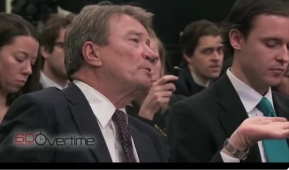
The room was crowded on Friday, and only a select few got to see the event unfold “live.” Of course, committee members, panelists and staff were accommodated. A few other guests had chairs reserved for them, and eight journalists were let in – including this reporter, who was given a small stool at the back of the room at the last minute.
During the meeting, Dreier suggested to Rep. Louise Slaughter (D-N.Y.) that the chairwoman should ask that cameras be permanently installed in the room. Dreier said it would provide “an opportunity for the American people to see what takes place in this committee.”
Slaughter said she had not tried to ban cameras from any of the committee’s meetings. Dreier pointed out that under House rules, she was not allowed to ban cameras in any case.
“We want to make sure on a daily basis that people see what goes on in the Rules Committee,” Dreier said. “So I implore you, Madam Chair, allow an opportunity for cameras to actually be placed in this room,” Dreier said.
Slaughter did not agree to the idea, at least not during the televised meeting. But she did admonish Dreier during his remarks that he should “get back to health care.”
The irony was not lost on this reporter, who has witnessed a distinct lack of transparency in covering the Obama administration, including reporting on the health care debate – a debate that Obama promised would be covered from start to finish by C-Span.
The business at hand, of course, was much more profound than how many people got into the room, even the journalist “watch dogs” whose job it is to report to the American people what their representatives are up to in the halls of power.
The success or failure of the proposed health care legislation will fundamentally change this country for better or worse.
But it was refreshing to see one politician say for the record and in front of the American public that he wanted people to have access to the men and women they elected to represent them.
It remains to be seen, however, just how many cameras are installed and doors opened wide during the next three years of Mr. Obama’s first term.